
At home, your dog may respond instantly, stay close, and seem fully connected to you. But the moment distractions appear, other dogs, people, food smells, noises, movement, that connection can suddenly feel much weaker. Owners often describe it as their dog “forgetting they exist” the second they enter a busy environment.
The reality is that a dog’s attention is limited. In a calm setting, you may have nearly all of it. In a stimulating public space, you could be competing for only a small fraction of your dog’s focus.
That is where engagement training becomes so important.
The “Invisible String” Theory in Dog Training
The “Invisible String” theory describes the connection between a dog and owner that goes beyond obedience alone. It is the feeling that your dog is mentally tuned in to you, even when there are distractions all around.
A dog can technically know how to sit, heel, or come when called, yet still struggle in busy environments because their attention is constantly being pulled elsewhere.
At K9 Basics, engagement is treated as the foundation of reliable training. The goal is to build a dog that wants to work with the owner, not simply respond to pressure or repetition.
When that connection strengthens, obedience naturally becomes more consistent because the dog begins to prioritize the handler over the environment.
Why Connection Matters More Than Constant Commands
In highly distracting environments, owners often fall into the habit of repeating commands over and over in an attempt to regain focus. The problem is that commands do not automatically create engagement. In many cases, the dog simply learns to tune the owner out.
A strong connection changes that dynamic completely. When a dog is genuinely engaged with their handler, they naturally begin paying closer attention without needing constant reminders.
At K9 Basics, training is about building a relationship where the dog actively chooses to stay connected to the owner, even when the environment offers endless distractions.
Trainers often describe this feeling as an “invisible string” between the dog and handler. The dog naturally checks in, stays aware of the owner’s movements, and wants to work together instead of constantly scanning the environment for the next exciting thing.
That is why K9 Basics places so much emphasis on relationship-based training in real-world settings. Dogs are rewarded for choosing engagement and learning that staying connected to their owner is valuable, even when distractions are present.
Engagement Between Dogs and Owners
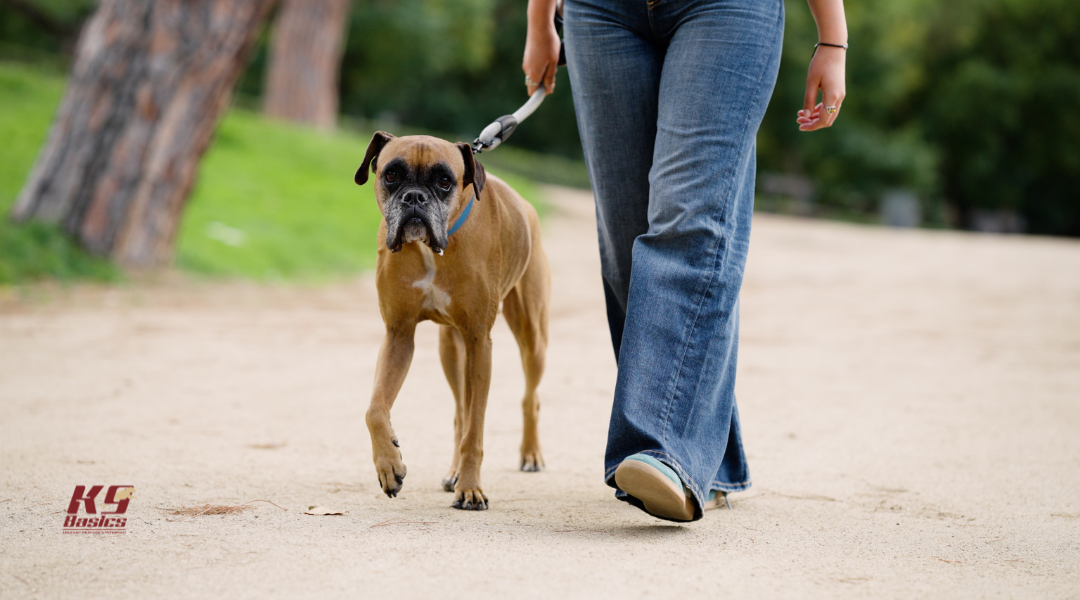
Engagement is the ability for a dog to stay mentally connected to the owner while moving through different environments.
Dogs with strong engagement tend to check in naturally during walks, stay more aware of the owner’s direction and pace, and recover more quickly from distractions.
They are less likely to become completely consumed by everything happening around them because they view the handler as part of the experience instead of background noise.
Dogs Learn to Check In Naturally With Their Handler
One of the clearest signs of strong engagement is when a dog begins voluntarily checking in with their owner without being asked.
At K9 Basics, dogs are taught that choosing the owner is rewarding. Through structured group training and carefully managed distractions, dogs begin learning that engagement leads to clarity, confidence, and success.
Over time, this creates the “Invisible String” effect many owners are looking for. The dog feels connected to the handler even in busy, stimulating environments, making real-world training far more reliable and enjoyable.
Why Dogs Struggle to Focus in Busy Environments
Public spaces are filled with movement, unfamiliar smells, noises, people, food, dogs, and unpredictable activity. For social or high-energy dogs, especially, this can quickly become overstimulating. The environment becomes far more rewarding than the owner, making focus difficult to maintain.
At K9 Basics, training focuses heavily on helping dogs learn how to stay mentally balanced in the real world. The goal is not to eliminate distractions, but to teach dogs how to work through them calmly and confidently.
How to Build Better Focus Around Distractions
Many owners unintentionally place dogs into overwhelming environments too quickly and expect perfect obedience immediately. True engagement develops when dogs are taught how to succeed around distractions step by step.
This means rewarding calm check-ins, reinforcing attention during movement, and teaching the dog that staying connected to the handler is more valuable than constantly reacting to the environment.
At K9 Basics, distractions are introduced throughout training so dogs can learn how to stay engaged under increasing levels of stimulation. Over time, dogs begin to recover from distractions more quickly and maintain focus for longer periods without constant correction.
The Importance of Engagement Training for Social Dogs
Social dogs are often friendly, outgoing, and eager to interact with their surroundings. While owners usually view this positively, excessive social interest can make it difficult to maintain focus and obedience in public settings.
Many social dogs struggle because they feel pulled toward every person, dog, smell, or movement they encounter.
Engagement training helps redirect that focus back toward the handler without shutting down the dog’s personality. The goal is not to make dogs less social. It is meant to help them learn that excitement and self-control can coexist.
How Group Dog Training Strengthens the Human-Dog Bond
Group training creates opportunities for dogs and owners to work through real-world distractions together in a controlled environment.
Unlike private sessions at home, group classes expose dogs to movement, sounds, unfamiliar people, and other dogs while still maintaining structure and accountability. This teaches dogs to stay engaged with their owner even when more exciting things are happening nearby.
At K9 Basics, group training is designed to challenge both the dog and owner in practical situations that reflect real life.
Common Signs Your Dog Needs More Engagement Training
Many dogs know basic obedience commands but still struggle with engagement in everyday situations.
Common signs include pulling toward distractions during walks, ignoring commands around other dogs or people, constantly scanning the environment, struggling to settle in public spaces, or becoming overly excited the moment activity increases around them.
Some dogs also become frustrated or anxious because they do not know how to process busy environments calmly. Rather than looking to the owner for guidance, they become mentally consumed by everything happening around them.
Engagement training helps create clarity in those situations. Instead of relying on constant corrections or repeated commands, dogs learn how to stay mentally connected and balanced while navigating real-world distractions.
At K9 Basics, the focus is always on building dogs that can confidently function outside of controlled training environments, not just perform obedience inside the home.
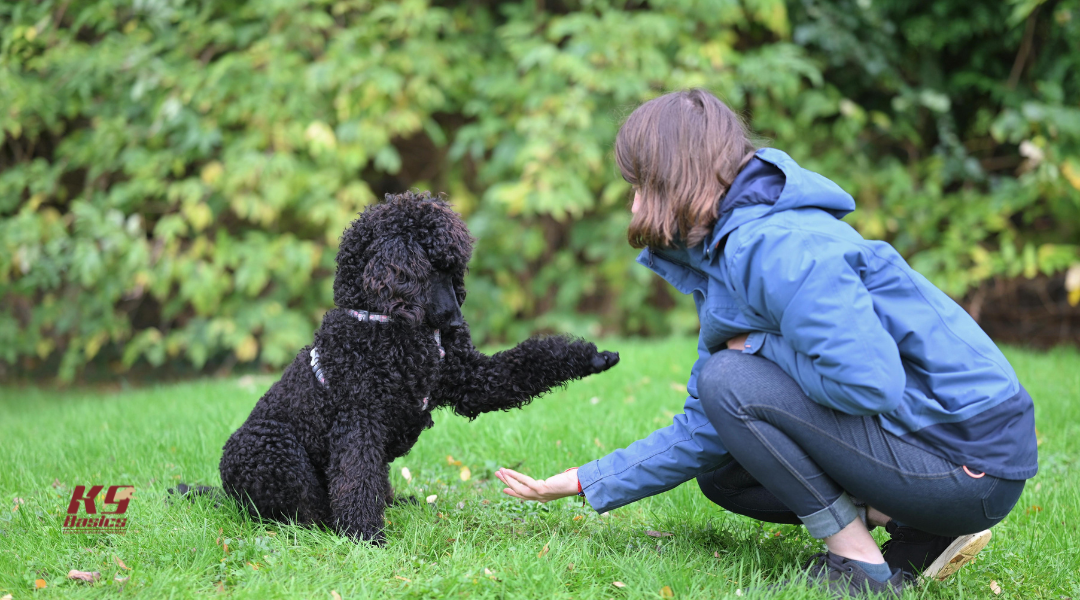
Strengthen Your Dog’s Focus With Group Training at K9 Basics
Call us at (866) 457-3815 or, if you’re from New Jersey, Pennsylvania, Delaware, or New York, visit us at 131 Kennilworth Road, Marlton, NJ 08053, to learn more about our group training classes.
Also, browse our blog and social media for various topics about dogs and their lives with us!