
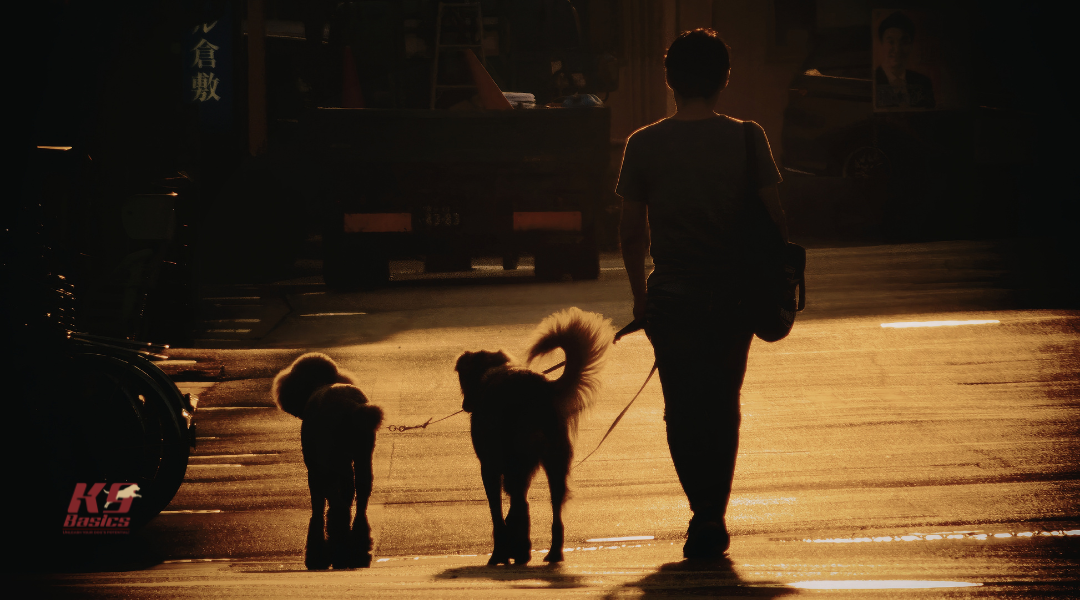
While nighttime outings can be peaceful, they also come with added challenges, reduced visibility, increased distractions, and a higher risk of sudden reactions from both dogs and their surroundings.
Dark-evening dog walks require more than just grabbing a leash and heading out the door. Nocturnal animals, passing cars, icy sidewalks, and limited sightlines can quickly turn an ordinary walk into a stressful or unsafe situation.
With the right combination of safety equipment, route planning, and reinforced obedience skills, nighttime walks can remain calm, controlled, and enjoyable. By focusing on visibility, leash manners, and situational awareness, dog owners can keep both themselves and their dogs safe.
Dark-Evening Dog Walks Require Extra Planning
Early sunsets change a dog’s walking environment in ways that are easy to underestimate. Familiar routes look different in low light, shadows move unpredictably, and normal daytime cues are no longer as clear.
Dogs rely heavily on their senses, and when visibility drops, they often become more alert and reactive to sounds, movement, and scent. What feels like a calm evening walk to an owner can feel much more stimulating and uncertain to a dog.
Nighttime also brings out distractions that are not present during the day. Wildlife such as raccoons, possums, and deer are more active after dark, and dogs often detect them long before humans do.
A sudden noise, rustling bushes, or quick movement can trigger instinctive chasing or pulling behaviors, especially in dogs with higher prey drive. These reactions occur more quickly at night, leaving less time for owners to respond if they are not prepared.
Reduced visibility adds another layer of risk for both dogs and handlers. It becomes harder to spot uneven ground, icy patches, or approaching vehicles. Dogs are also less visible to drivers, cyclists, and pedestrians, increasing the risk of close calls at road crossings.
Without proper planning, equipment, and awareness, small mistakes can quickly turn into safety issues. Preparing for these challenges helps keep nighttime walks controlled, predictable, and safe for everyone involved.
Essential Safety Gear for Nighttime Dog Walks
Proper equipment is one of the most effective ways to reduce risk during dark-evening walks. When visibility drops, safety gear helps owners stay aware of their surroundings while making dogs easier to see and control.
The right setup supports both safety and training, allowing walks to remain calm and predictable even in low-light conditions.
Using Headlamps to Stay Hands-Free and Alert
A headlamp is one of the most practical tools for nighttime walks. It provides consistent light without occupying your hands, which are already managing a leash and waste bags.
Keeping light directed where you are looking improves awareness of the path ahead, helps identify movement early, and allows you to spot potential hazards such as uneven pavement or wildlife before they become a problem.
LED Collars and Light-Up Accessories for Visibility
LED collars and clip-on lights make dogs visible from all angles, not just the front. This is especially important for dark-coated dogs who can disappear into the shadows after sunset.
Light-up accessories help owners track their dog’s position at all times and make it easier for drivers, cyclists, and pedestrians to notice the dog from a distance. Increased visibility reduces surprise encounters and improves overall safety.
Reflective Leashes, Coats, and Bandanas for Traffic Safety
Reflective gear adds another layer of protection during nighttime walks, especially near roads or crossings. Reflective leashes, jackets, and bandanas catch headlights and streetlights, making both the dog and handler more visible. This added visibility gives drivers more time to react and helps prevent close calls in low-light conditions.
Reinforcing Leash Manners for Night Walk Success
Safety gear works best when paired with solid leash manners. A dog that walks calmly on a loose leash is easier to control and less likely to pull an owner off balance in the dark.
Reinforcing leash skills indoors or during daylight hours helps ensure that nighttime walks stay controlled, allowing safety equipment to do its job without added strain or risk.
Choosing the Right Routes for Evening Walks
Where you walk your dog at night matters just as much as how you walk them. Route selection plays a major role in reducing distractions, improving visibility, and keeping both dog and handler safe after dark.
Why Familiar Paths Are Safer After Dark
Familiar routes reduce surprises. Dogs are less likely to react when they already know the environment, and owners are better prepared for changes in terrain, traffic patterns, or common distractions. Walking a known route allows you to anticipate corners, curbs, and areas where wildlife may appear, giving you more control and confidence during low-light outings.
Sticking to Well-Lit Streets and Sidewalks
Well-lit areas make it easier to spot hazards early and help others see you and your dog. Streetlights, illuminated sidewalks, and visible crossings reduce the risk of accidents and give dogs fewer reasons to feel uncertain or overstimulated. Consistent lighting also supports training by keeping the environment predictable and easier to manage.
Avoiding New or High-Distraction Areas at Night
Nighttime is not the ideal moment to introduce new walking locations. Unfamiliar smells, sounds, and movement can overwhelm dogs, especially when visibility is limited. High-distraction areas, such as wooded paths, poorly lit parks, or busy intersections, increase the risk of sudden reactions. Saving exploration walks for daylight hours helps keep evening outings calm and controlled.
Preventing Sudden Lunges and Chasing Behavior
Dogs often detect movement and sound long before humans do, especially at night. Wildlife, rustling leaves, or fast-moving shadows can trigger instinctive lunging or chasing behaviors. Preventing these reactions starts with maintaining leash control, reinforcing calm walking, and staying aware of your surroundings.
Teaching “Wait” and Impulse Control at Curbs
Impulse control becomes even more important after sunset. Teaching dogs to pause at curbs before crossing streets creates a predictable safety habit that protects both dog and owner. A reliable “wait” command gives handlers time to assess traffic, regain focus, and ensure it is safe to proceed. Practicing this skill regularly builds patience and reduces impulsive movement in low-visibility situations.
Building a Reliable Recall for Evening Outings
A strong recall is a critical safety skill, especially when visibility is limited. Even on leash, recall training reinforces responsiveness and focus, helping dogs disengage from distractions quickly.
Consistent recall practice builds trust and gives owners confidence that their dog will respond when it matters most, even in unexpected nighttime scenarios.
The team at K9 Basics Training works with dogs and owners to strengthen leash manners, impulse control, and recall skills that directly improve nighttime walk safety.
Through structured training and personalized guidance, they help teams build confidence and control so evening walks stay calm, predictable, and secure.
Building Confidence for Both Dog and Owner After Dark with K9 Basics!
Call us at (866) 592-2742 or, if you’re from New Jersey, Pennsylvania, Delaware, or New York, visit us at 131 Kennilworth Road, Marlton, NJ 08053, to learn more about our group training classes.
Also, browse our blog and social media for various topics about dogs and their lives with us!