

A decorated Christmas tree may look magical to us, but to many dogs it looks like a giant toy, a new bathroom spot, or a curiosity begging to be explored. From dangling ornaments that resemble tennis balls to the sudden appearance of an evergreen inside the house, the holidays introduce sights, scents, and temptations your dog has never encountered before.
Without guidance, it’s completely normal for dogs to sniff, paw, chew, or even try to mark the tree, especially younger dogs or those experiencing their first Christmas. The good news? With the right training approach and a little bit of planning, you can teach your dog to respect the tree, ignore the ornaments, and enjoy the holidays safely.
Here’s how to set clear boundaries, prevent unwanted habits from forming, and create a calm, well-mannered environment around your Christmas tree all season long.
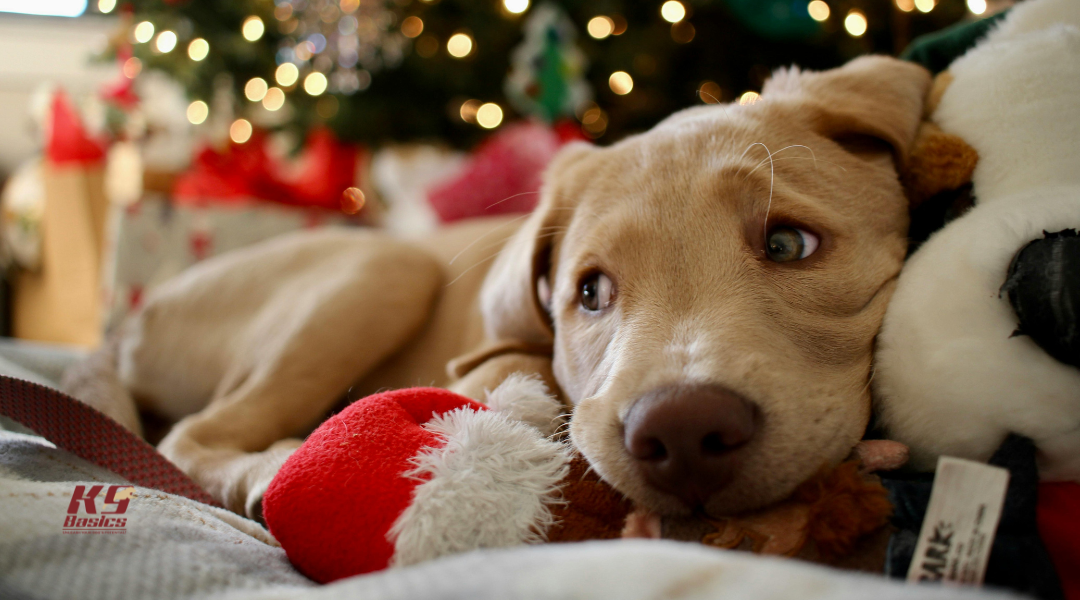
Why Dogs Are Naturally Drawn to Christmas Trees and Decor
Christmas trees introduce an entirely new world of scents, textures, and objects into your dog’s home environment. From the moment the tree enters the house, your dog’s curiosity is triggered, it smells like the outdoors, feels different, and instantly becomes the most interesting thing in the room. Dogs explore new additions with their noses first, which is why the base of the tree is usually the first thing they inspect.
For many dogs, especially males, trees also resemble familiar marking spots. Bringing an evergreen indoors can confuse the natural instinct they’ve been practicing all year outside. As Arnold explained, if you don’t establish boundaries immediately, some dogs will attempt to mark the tree simply because it feels like “their usual job.”
Then there are the ornaments. To a dog, hanging spheres, plush shapes, and shiny objects resemble toys, tennis balls, stuffed items, chewables, all suspended right at eye level. Without training, those temptations are nearly impossible to resist. It’s not misbehavior; it’s instinct, curiosity, and opportunity all happening at once.
Your Dog’s First Reaction to Holiday Decorations
Puppies and newly adopted dogs have absolutely no frame of reference for holiday décor. The garland, lights, tree skirt, and ornaments are all unfamiliar stimuli, and dogs rely on experience to understand what’s normal. When holiday items suddenly appear, they don’t yet know how to behave around them, so they explore, test boundaries, and investigate whatever seems interesting.
These sudden environmental changes can confuse or overstimulate dogs, especially those already sensitive to new sights and sounds. A house that looks and smells different, combined with the appearance of a tree in the living room, creates a sensory overload many dogs don’t know how to process.
Without guidance or supervision, dogs form their own associations. If a puppy chews an ornament once and finds it fun, that becomes the habit. If a dog marks the tree once and no one intervenes (as in Arnold’s story), they’ll repeat the behavior the next year because that association is now locked in. Clear leadership, timing, and consistency are what prevent those first reactions from turning into long-term holiday problems.
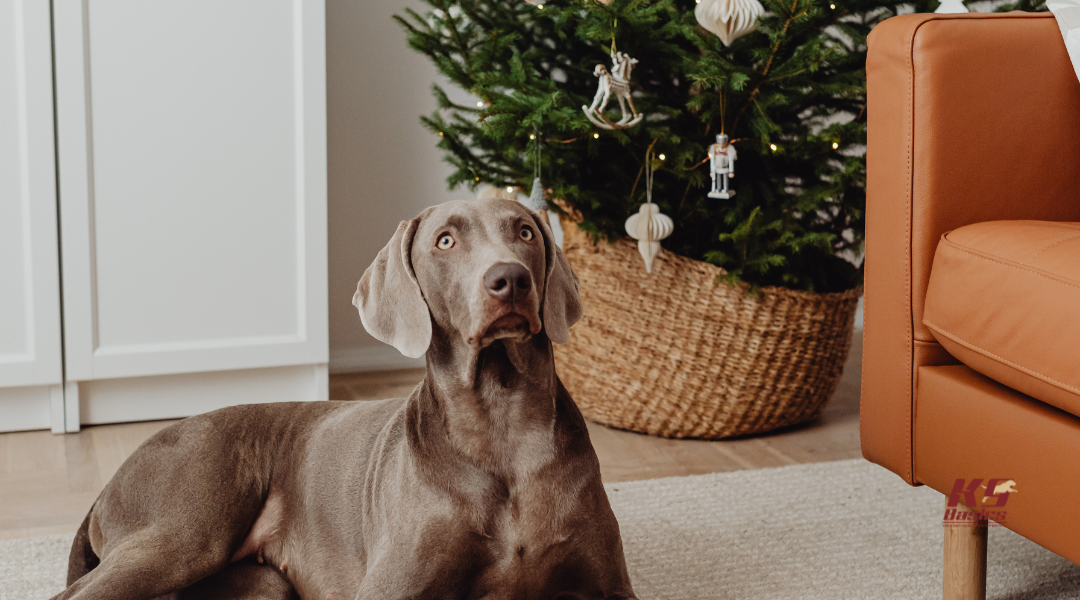
Step-by-Step Boundary Training for Christmas Tree Safety
- Start with supervised exposure to prevent bad habits from forming
The first time your dog sees the tree, you must be present. This is where most owners go wrong, they bring the tree in, let the dog “check it out,” and hope for the best. Instead, treat that first exposure like a training session. Stay close, watch your dog’s body language, and interrupt any sniffing that lingers too long at the base, pawing at ornaments, or attempts to chew cords or décor. By supervising from the start, you stop problem behaviors before they ever become “tradition.” - Keep your dog leashed during early introductions for better control
A leash is your best tool during those first few days. It doesn’t need to be tense or restrictive, it’s simply there so you can step in before your dog marks the tree, jumps up, or bats at ornaments. Walk your dog calmly around the room, allow brief, controlled sniffs, and then gently guide them away. This gives you the ability to redirect instantly instead of shouting from across the room after the mistake has already happened. - Use clear “leave it” and “back away” commands during exploration
As your dog investigates, this is the perfect time to reinforce obedience around holiday distractions. When they show too much interest in the tree or ornaments, calmly use cues like “leave it” or “back”/“back away,” and then reward them for disengaging. The goal is to teach your dog that moving away from the tree is what earns praise and rewards. Over time, they’ll learn that the tree is off-limits, and those clear, practiced commands will give you control any time curiosity kicks in.
How to Build Positive Associations Around the Tree
Building positive associations starts with helping your dog understand that the Christmas tree is part of the home, not a toy, bathroom spot, or new playground. Dogs thrive on clarity, so the goal is to create calm, predictable interactions around the tree from day one. Instead of letting your dog freely explore and make their own decisions, you guide the experience, supervised intros, clear boundaries, and consistent reinforcement every time they navigate the space. When your dog learns that calm behavior earns praise and rewards while excitement earns redirection, the tree becomes just another neutral part of their environment.
Environmental Management to Support Your Training
Use pens, gates, or barriers to block off the tree initially
Physical management is your strongest tool during the early days. Just like Arnold’s story about year-one tree-marking, preventing mistakes at the beginning stops long-term habits from forming. Barriers ensure your dog can’t rush the tree or rehearse unwanted behavior when you aren’t looking.
Strategically place ornaments out of reach of curious dogs
Keep fragile, plush, or ball-shaped ornaments higher on the tree, anything that looks like a toy is a guaranteed temptation. This reduces the visual triggers that make dogs paw, chew, or jump toward decorations.
Secure electrical cords, hooks, and fragile décor for safety
Tuck cords behind furniture, use cord covers, and ensure hooks and hanging pieces aren’t dangling at nose level. Removing access to dangerous or enticing items helps prevent injuries and keeps training focused on boundaries, not safety emergencies.
The Training Mistakes That Lead to Tree Trouble
Giving dogs too much freedom during the first introduction
Unsupervised early exposure almost always leads to problems. Whether it’s marking, chewing, or knocking into ornaments, those first few minutes set the tone, and if the dog learns “I can do whatever I want here,” you’ll spend the rest of December undoing the habit.
Assuming “sniffing is harmless” until marking or chewing happens
Lingering sniffing around the base of the tree is often a precursor to lifting a leg or taking a bite. As Arnold mentioned, dogs follow their instincts, and without timely interruption, innocent sniffing becomes immediate misbehavior.
Ignoring breed or age-related tendencies toward curiosity
Puppies and high-drive breeds are naturally more investigative. Dogs who love toys will see ornaments as theirs; male dogs may see the tree as a marking post; sensitive dogs may be overstimulated by lights and smells. Failing to account for these tendencies makes training harder and increases the chance of repeat issues.
Real-Life Lessons From Professional Trainers
Arnold’s experience with his own dog is the perfect example of why early supervision and clear boundaries matter around holiday decorations. The first year he brought a Christmas tree into the house, his dog Jack naturally walked over, sniffed around, and, because no one interrupted or guided him, lifted his leg and marked the tree. It was an innocent moment rooted in instinct: an outdoor object suddenly appeared indoors, and Jack treated it exactly the way he always treated trees outside.
The following year, despite being a more mature, better-trained dog, Jack repeated the behavior. Not because he was “being bad,” but because the previous year had taught him a simple association: “When the tree comes in, this is what I do.” That one moment of unsupervised exploration became a learned holiday habit.
It wasn’t until Arnold stepped in with proper supervision, structure, and clear guidance that the behavior stopped permanently. By managing Jack’s access, interrupting sniffing before it escalated, and setting boundaries early, he prevented it from becoming a recurring issue.
This story perfectly illustrates what trainers see every holiday season:
Dogs don’t magically understand new decorations. If they don’t get guidance during that first introduction, their natural instincts take over and those instincts can turn into long-lasting habits.
Safety Protocols Every Dog Owner Should Follow
Holiday décor brings more hazards than most owners realize, and dogs, especially curious puppies or high-energy breeds, can get into trouble fast. Monitoring your dog closely around the tree is essential, especially during the first few days. Ornaments, hooks, tinsel, cords, and tree water can all pose chewing, ingestion, and choking risks. Even a single unmonitored moment can lead to a dangerous situation.
When you can’t supervise directly, rely on crates, playpens, or designated safe zones to keep your dog out of the décor-heavy areas. This isn’t punishment, it’s prevention. As Arnold’s story shows, unsupervised “just checking it out” moments easily turn into habits or accidents that are harder to reverse.
You should also have a holiday emergency plan in place. If your dog eats an ornament, chews a light strand, or swallows something sharp, knowing which vet or emergency clinic to call saves precious time. Quick action matters, and in holiday chaos, having that plan ready offers peace of mind.
When to Bring in Professional Help
If your dog continually returns to the tree, ignores boundaries, or shows escalating curiosity or anxiety around holiday décor, professional guidance can make a big difference. Trainers like those at K9 Basics can quickly identify whether the issue stems from habit, overstimulation, a lack of structure, or breed tendencies.
Professional help is especially valuable for dogs who have already formed unwanted associations, like marking, chewing ornaments, or darting toward decorations the moment they’re left alone. With the right techniques and controlled exposure, trainers can reset those patterns and teach safer, clearer behaviors that last well beyond the holiday season.
Keep Your Holidays Stress-Free With K9 Basics Training
Call us at (866) 592-2742 or, if you’re from New Jersey, Pennsylvania, Delaware, or New York, visit us at 131 Kennilworth Road, Marlton, NJ 08053, to learn more about our group training classes.
Also, browse our blog and social media for various topics about dogs and their lives with us!