
You invest time, money, and energy into training your dog. You practice commands daily, reinforce boundaries, and start seeing real progress. Then, a few weeks into daycare or regular walks with a new caregiver, something shifts.
The jumping returns. The leash pulling creeps back in. Commands that were reliable suddenly become optional. Inconsistency slows progress and can even reverse it.
Sustainable behavior change requires positive reinforcement across every environment your dog enters. Without consistency, even the best training plan can unravel.
Costs and Concerns of Inconsistent Daycare and Walkers
Choosing care for your dog is often based on convenience, availability, and trust. What many dog owners do not factor in is how that care impacts training progress.
When expectations shift between home and professional care, the results are rarely neutral. Behavior either improves through reinforcement or weakens through inconsistency.
Good Behavior at Home Falls Apart During the Week
A dog may respond well in your home because the rules are clear and consistently applied. During the week, however, a different environment can introduce relaxed boundaries. Jumping may be tolerated. Leash pulling may go unchecked. Excited greetings may be encouraged.
By the time your dog returns home, behaviors you worked to reduce can resurface. This creates the impression that training has stopped working, when in reality it has simply not been reinforced outside the home.
When Private Care Undermines Your Training Investment
Training requires repetition and accountability. If a walker or daycare staff member allows behaviors that you are correcting, your dog receives reinforcement for the very habits you are trying to change. That slows progress and extends the timeline for improvement.
Over time, this inconsistency can require retraining. What should have been steady growth becomes a cycle of correction and relapse. The financial investment in training increases when reinforcement is not aligned across all caregivers.
Confusing Experience With Mixed Expectations
Dogs rely on clarity. When one environment requires calm behavior and another rewards impulsive actions, the dog is left to guess which rules apply. This inconsistency can lead to frustration, increased arousal, and unreliable responses.
Mixed expectations do not just affect obedience. They influence emotional stability. A dog that experiences consistent communication across environments develops confidence. A dog exposed to conflicting rules may struggle to maintain focus and self-control.
How Dogs Develop Cognitive Dissonance From Conflicting Rules
Dogs learn through patterns. When the same behavior produces different outcomes in different environments, confusion develops. Over time, this inconsistency affects reliability and decision making.
- Following Commands at Home but Ignoring Them Elsewhere
A dog may respond promptly in the house where expectations are clear, yet hesitate or disregard cues in other settings. This is not selective hearing. It is the result of unclear reinforcement history. If compliance is only required in one location, the dog learns that obedience is situational rather than universal. - Why Inconsistent Reinforcement Delays Real Progress
Skills strengthen when they are practiced and reinforced consistently. When some caregivers enforce boundaries and others overlook them, the learning process slows. The dog receives competing feedback, which weakens habits that should be becoming automatic. - The Long-Term Impact of Unchecked Bad Habits
Behaviors that are tolerated tend to intensify. Jumping, pulling, and impulsive greetings often become more ingrained when practiced daily without correction. Over time, these patterns are harder to modify because repetition has reinforced them.
Common Daycare Habits That Reverse Training Progress
Not all care environments operate with structured behavioral standards. Certain routine practices can unintentionally undermine training goals.
Allowing Jumping, Pulling, and Overexcitement
When enthusiastic greetings and leash tension are overlooked, dogs rehearse impulsive behavior. Repetition strengthens these patterns, making calm responses more difficult to maintain outside the facility.
Unstructured Group Play Without Behavioral Oversight
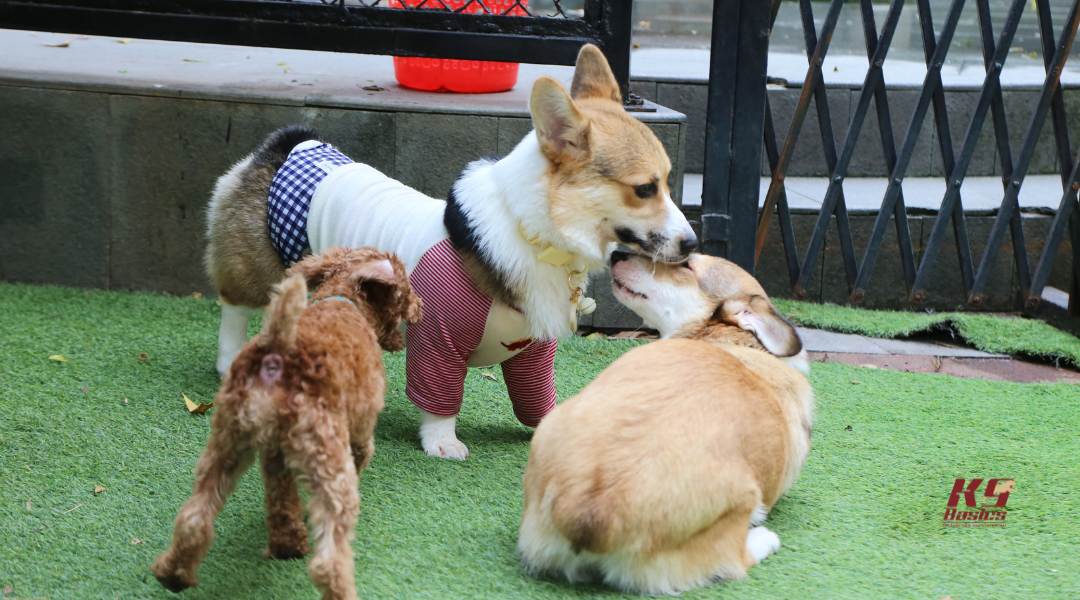
Free play without clear rules can encourage rough interactions, excessive arousal, and poor impulse control. Without guidance, dogs may practice behaviors that conflict with household expectations.
Staff Without Formal Training in Canine Behavior
Care providers who lack education in behavior management may miss early warning signs of stress or escalation. Without a clear framework for reinforcement and correction, consistency suffers and training progress can decline.
Behavior Change Requires Consistency Everywhere
Sustainable improvement depends on alignment across every environment your dog enters. Training does not pause when your dog leaves your home.
- Repetition Across Environments Builds Reliability
Skills become dependable when practiced in varied settings. Reinforcing expectations at daycare, on walks, and during boarding strengthens long term retention. - Unified Communication Prevents Mixed Signals
When all caregivers use the same cues and standards, the dog understands what is required. Clear communication eliminates guesswork and supports steady improvement. - Structure Outside the Home Is Just as Important as Structure Inside It
Progress accelerates when boundaries remain intact beyond the household. Consistency across locations promotes emotional stability and dependable behavior in everyday life.
The Advantage of an Integrated Training, Daycare, and Boarding Model
When training, daycare, and boarding operate separately, expectations often change from one environment to the next. That shift creates gaps in reinforcement. An integrated model eliminates those gaps.
At K9 Basics, our team is trained in behavior, structure, and consistent communication across every service we offer. Whether your dog is attending a training session, spending the day in daycare, or staying overnight for boarding, the same standards apply. Commands are reinforced. Boundaries are maintained. Calm behavior is expected and guided.
This continuity accelerates progress. Dogs do not have to relearn rules every time they transition between services. Instead, they experience clarity and stability in every setting. Our staff understands the individual goals for each dog and works together to support those goals daily.
The result is smoother transitions, more accurate behavioral evaluations, and stronger long term reliability. Training is not isolated to a scheduled session. It becomes part of your dog’s routine.
Protecting Your Investment in Your Dog’s Training
Professional training requires time, financial commitment, and consistent effort from owners. That investment should produce lasting results, not temporary improvements.
At K9 Basics, we view training as a comprehensive process rather than a single service. By aligning daycare and boarding with structured reinforcement, we help ensure that progress continues even when you are not present. Your dog practices appropriate behavior under supervision from professionals who understand your training plan.
This approach reduces regression, shortens the timeline for improvement, and builds habits that hold up in real life. Instead of undoing progress during the week and rebuilding it on weekends, your dog receives consistent guidance every day.
Protecting your investment means choosing care that supports your goals. With an integrated team and unified standards, K9 Basics helps maintain momentum so your dog’s development remains steady and reliable.
K9 Basics: Training That Supports, Not Undermines, Your Dog’s Progress
Call us at (866) 457-3815 or, if you’re from New Jersey, Pennsylvania, Delaware, or New York, visit us at 131 Kennilworth Road, Marlton, NJ 08053, to learn more about our group training classes.
Also, browse our blog and social media for various topics about dogs and their lives with us!