

If you’ve ever found yourself thinking, “My dog just isn’t getting it,” you’re not alone. Training can feel especially frustrating when you see other dogs picking up commands quickly while your furry friend seems stuck, distracted, or uninterested.
Dogs don’t all learn at the same pace; factors like genetics, age, emotional state, health, past experiences, and even human consistency all influence how quickly a dog responds to training.
What looks like resistance is often confusion, discomfort, stress, or a mismatch between the training approach and the dog in front of you.
Reason 1: Breed Genetics and Natural Temperament
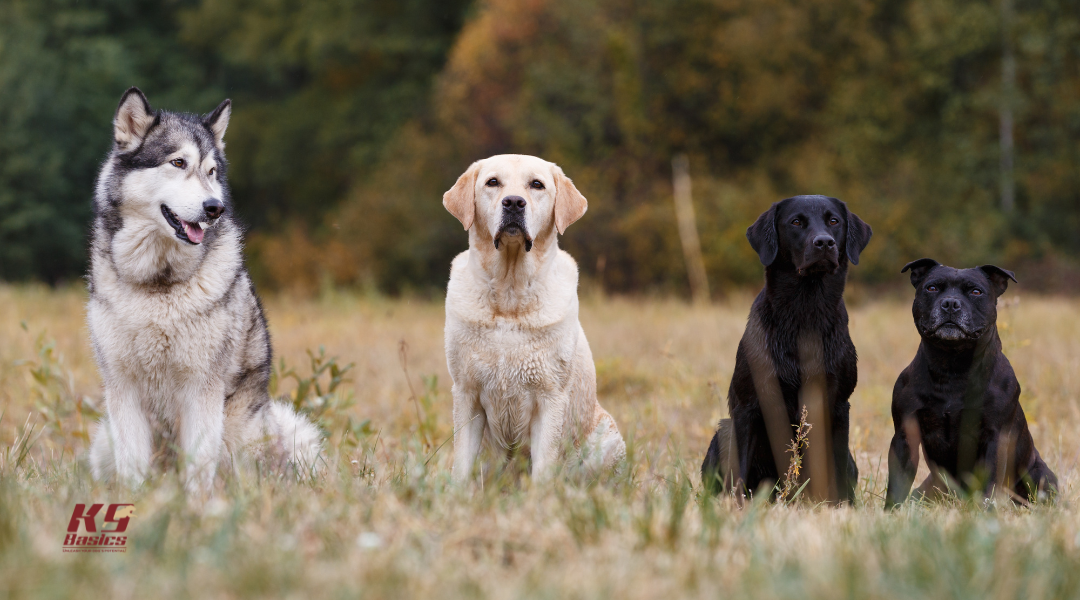
Breed genetics play a major role in how dogs process information, respond to guidance, and stay engaged during training. Some breeds were developed to work closely with humans and thrive on direction, while others were bred to think independently and make their own decisions.
Temperament also influences training pace. Sensitive dogs may need slower progression, quieter environments, and more reassurance to stay confident and engaged.
Confident or high-drive dogs may move faster but require clearer boundaries and stronger impulse control. Motivation varies as well. What excites one dog may mean nothing to another. Some dogs work enthusiastically for food, others prefer toys, praise, or movement.
K9 Basics trainers evaluate each dog’s genetic tendencies and temperament so training plans are built around how the dog naturally learns, not against it.
Reason 2: Age and Developmental Stage
Puppies have short attention spans and limited emotional regulation, which means training must be broken into short, manageable sessions with realistic expectations.
Progress at this stage is about exposure, habit-building, and confidence rather than precision or duration.
Adolescent dogs often appear to “forget” their training as hormones, independence, and curiosity peak. This phase can be frustrating, but it is a normal part of development. Training during adolescence requires patience, consistency, and reinforcement of foundations rather than constant escalation.
Older dogs, on the other hand, may have deeply ingrained habits that take longer to change. While they are absolutely capable of learning, progress often depends on reshaping patterns that have existed for years.
K9 Basics trainers help owners adjust expectations based on developmental stage and guide them through age-appropriate training strategies that support steady, sustainable improvement.

Reason 3: Past Experiences and Early Life History
Dogs that have experienced fear, instability, neglect, or trauma often approach learning cautiously. Stress and anxiety can limit focus, reduce motivation, and slow progress, even when the dog is willing to try. In these cases, training success depends on emotional safety as much as skill-building.
Dogs raised in stable environments with consistent boundaries often adapt more quickly to structured training. Shelter dogs or dogs with unknown backgrounds may need additional time to build trust before expectations can be raised.
At K9 Basics, trainers take a whole-dog approach, assessing emotional state, confidence level, and history before setting goals. By prioritizing trust and clarity first, dogs are given the space they need to learn at a pace that supports long-term success rather than short-term compliance.
Reason 4: Underlying Health or Physical Discomfort
Physical discomfort can dramatically affect a dog’s ability and willingness to engage in training.
Issues such as hip dysplasia, joint strain, muscle soreness, or even a minor injury can limit a dog’s participation and focus. Dogs are especially good at masking pain, so subtle changes like slower responses, avoidance of certain movements, or decreased enthusiasm are easy to miss.
What appears to be “not listening” is often a dog protecting their body. At K9 Basics Training, trainers are trained to notice these signs and adjust expectations, exercises, and timelines while encouraging owners to rule out physical discomfort before pushing for behavioral change.
Reason 5: Low or Mismatched Motivation
Motivation is the engine behind learning, and when rewards don’t resonate with a dog, training stalls quickly. Not every dog is driven by food, and not every dog values toys or praise equally.
If the reward offered does not match what the dog finds meaningful, engagement drops and progress slows.
Rather than pushing harder, effective training requires finding the right currency for that individual dog. K9 Basics trainers help identify what truly motivates each dog and adjust reinforcement strategies so training feels rewarding, clear, and sustainable rather than forced.

Reason 6: Inconsistent Training
Inconsistency is one of the most common reasons dogs struggle to respond reliably. Mixed signals, changing rules, and uneven follow-through confuse dogs and make it difficult for them to understand expectations.
When a behavior is allowed one day and corrected the next, dogs are left guessing, which slows learning and increases frustration.
Short, regular training sessions with clear expectations are far more effective than occasional long sessions followed by long breaks. Busy schedules, skipped reinforcement, and uneven accountability create gaps that dogs cannot fill on their own.
At K9 Basics, trainers work closely with owners to build realistic routines, document progress, and adjust plans so training remains consistent even when life gets busy.
Reason 7: Environmental Distractions Overpower Focus
Outdoor spaces introduce movement, sound, scent, and unpredictability, which can overwhelm a dog’s ability to focus, especially for dogs with high prey drive or heightened environmental awareness. Squirrels, birds, passing dogs, traffic, and unfamiliar noises compete directly with the handler for attention.
Training needs to be built gradually across environments. Expecting the same level of obedience everywhere without this progression sets dogs up to struggle.
At K9 Basics, trainers assess where focus breaks down and help owners systematically rebuild obedience across different environmental distractions, ensuring dogs are mentally ready for each step rather than overwhelmed by it.

Reason 8: Stress, Anxiety, or Emotional Overload
Learning shuts down when a dog is stressed or anxious. Fear, uncertainty, or emotional overload can block a dog’s ability to process information, even if they understand the command in calmer settings. Dogs that are over threshold may appear distracted, unresponsive, or stubborn, but in reality, their nervous system is in survival mode rather than learning mode.
Recognizing stress signals is critical. Freezing, avoidance, excessive panting, scanning, or sudden disengagement are all signs that a dog needs support, not pressure.
K9 Basics trainers prioritize emotional state alongside obedience, helping owners adjust pacing, environments, and expectations so dogs feel safe enough to learn and succeed.
Reason 9: Training Methods That Don’t Fit the Dog
No single training method works for every dog. One-size-fits-all approaches fail because dogs differ in temperament, motivation, sensitivity, and learning style.
A method that works well for a confident, food-driven dog may cause confusion or shutdown in a more sensitive or independent dog.
Effective training requires adaptation. This means adjusting reinforcement, communication style, session length, and progression based on the individual dog rather than forcing compliance. At K9 Basics, trainers tailor methods to the dog in front of them, ensuring training supports understanding and confidence rather than resistance.
Creating Better Training Outcomes with K9 Basics!
Call us at (866) 592-2742 or, if you’re from New Jersey, Pennsylvania, Delaware, or New York, visit us at 131 Kennilworth Road, Marlton, NJ 08053, to learn more about our group training classes.
Also, browse our blog and social media for various topics about dogs and their lives with us!