
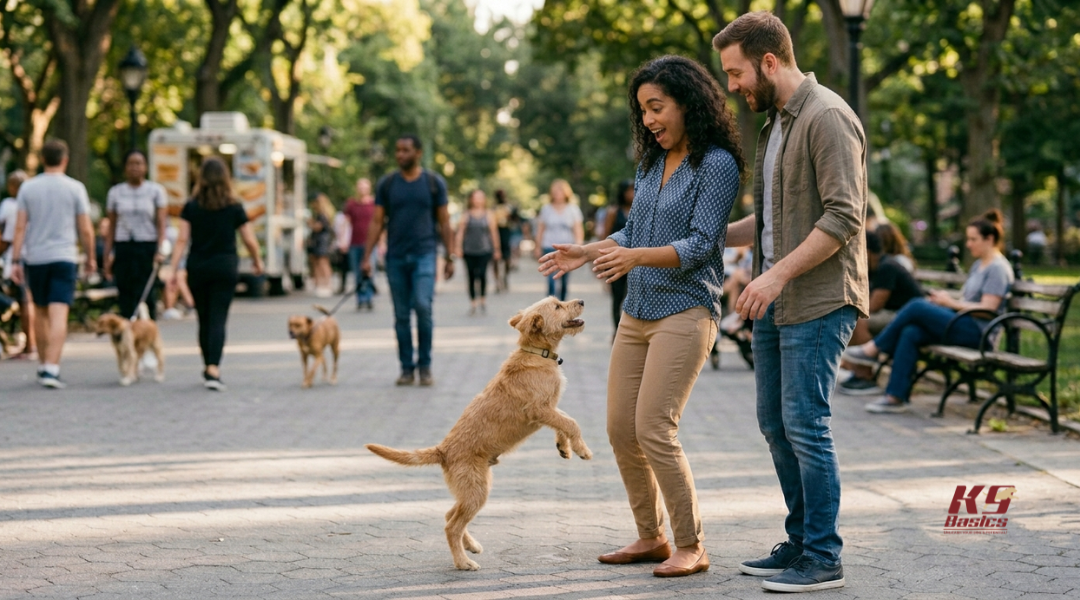
Few dog behaviors frustrate owners more than jumping.
What starts as an excited puppy greeting can quickly become an everyday problem when a fully grown dog is launching at guests, children, or strangers.
In response, many owners search for quick solutions and often come across techniques such as the “reverse hug,” in which the dog’s front legs are gently restrained when they jump.
Our K9 Basics team approaches training through the lens of understanding the individual dog in front of you rather than relying on cookie-cutter corrections.
Why Do Dogs Jump on People
Jumping is one of the most common behaviors owners struggle with, especially in social or high-energy environments. For dogs, jumping is often a completely natural behavior.
Puppies jump toward their mothers for attention, dogs greet face-to-face naturally, and many quickly learn that jumping creates interaction from humans.
In many cases, owners unintentionally reinforce the behavior without realizing it. Talking to the dog, pushing them away, grabbing their paws, laughing, or even making eye contact can still feel rewarding to a dog that simply wants engagement and attention.
At K9 Basics, the focus is not only on stopping the jumping itself but on understanding why the behavior is happening in the first place. That distinction matters because different motivations require different training approaches.
Attention-Seeking vs. Excitement-Driven Jumping
Not all jumping behavior comes from the same emotional state.
Some dogs jump because they are actively seeking interaction. Others jump because excitement overwhelms their impulse control entirely.
Attention-seeking dogs often learn that jumping works. Even negative reactions can reinforce the behavior because the dog still receives engagement from the owner or guest.
In these cases, ignoring the behavior completely can be highly effective because the dog realizes that jumping no longer produces the desired result.
Excitement-driven jumping is often different. These dogs become overstimulated by movement, visitors, walks, play, or environmental energy.
These dogs may not stop simply because they are ignored, because the excitement itself has become internally rewarding.
What Is the “Reverse Hug” Technique?
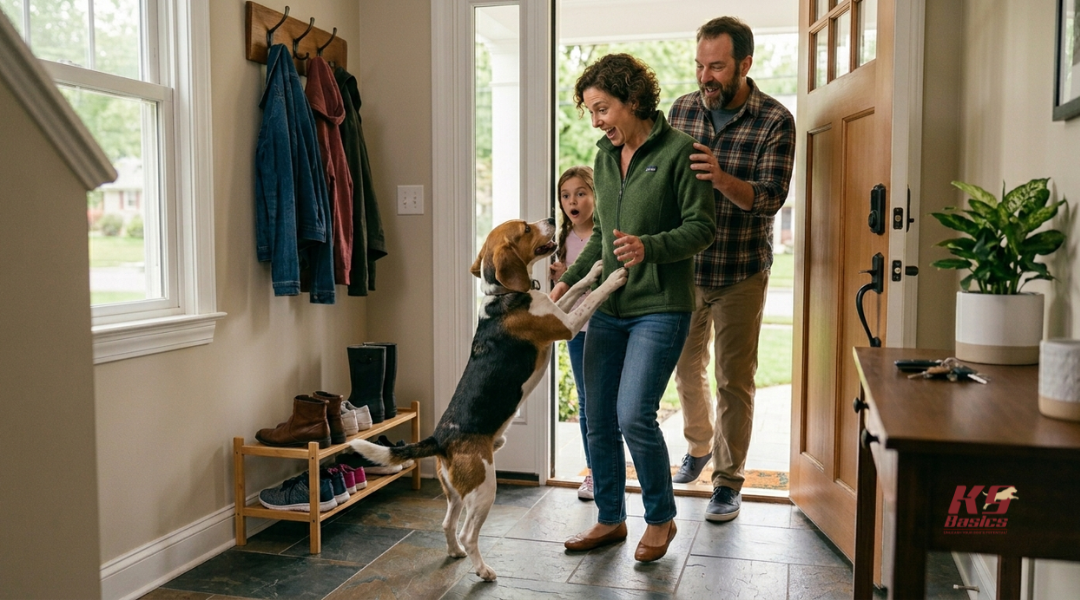
The “reverse hug” technique usually refers to gently holding or restraining a dog’s front legs when they jump onto a person.
The idea is that the dog becomes uncomfortable or restricted enough to stop repeating the behavior over time.
For some owners, it appears to create fast results because the dog quickly realizes that jumping no longer feels rewarding or comfortable. The method is often promoted online as a quick fix for greeting manners and attention-seeking behavior.
The issue is that the technique only addresses the visible behavior itself. It does not necessarily teach the dog what they should do instead, nor does it address why the dog is jumping in the first place.
Does Gentle Restraint Actually Work?
Some dogs respond quickly to physical interruption because the behavior immediately stops producing the result they wanted.
Others may become more frustrated, more excited, or completely unaffected by the restraint. Highly driven or highly stimulated dogs may continue jumping despite repeated corrections because their emotional arousal is simply overpowering the consequence.
That is why long-term success usually comes from combining clear boundaries with teaching alternative behaviors. Dogs need to understand what earns attention, what creates calm interaction, and how to regulate themselves during exciting moments.
At K9 Basics, the emphasis is placed on creating reliable behavior patterns rather than chasing temporary corrections that only work in certain situations.
Why There Is No One-Size-Fits-All Solution to Jumping
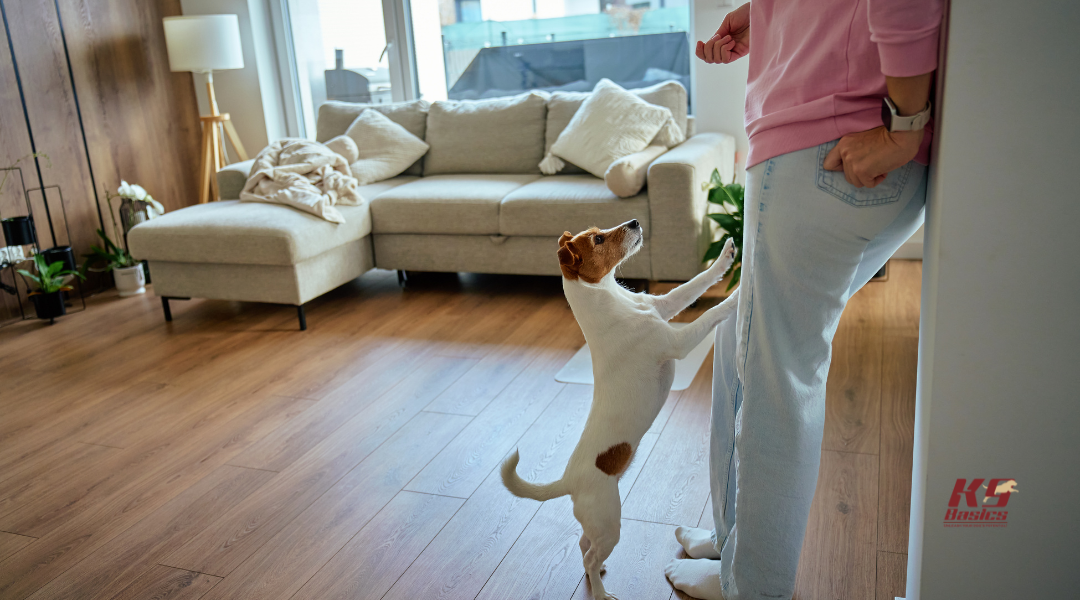
One of the biggest mistakes in dog training is assuming every dog processes pressure, rewards, and corrections the same way.
This is why generic online training advice often fails owners. A method that works perfectly for one dog may create frustration or confusion in another.
Real-world training requires adaptability. Trainers must constantly read the dog’s emotional state, motivations, thresholds, and environmental triggers.
Effective training is rarely about forcing a single method onto every dog. It is about finding the clearest and fairest way to communicate with the individual animal in front of you.
Adapting Training Methods to the Individual Dog
Good dog training is not rigid. It changes based on the dog’s temperament, energy level, confidence, drives, and learning style.
This ability to adapt is one of the biggest differences between experienced hands-on training and generic online tutorials.
Dogs are constantly giving feedback through body language, energy, focus, and emotional shifts. Skilled trainers learn to adjust in real time based on what the dog is communicating.
At K9 Basics, training plans are built around the dog’s individual behavior patterns rather than forcing every dog through the exact same formula.
How Leash Management Can Prevent Rehearsed Jumping
One of the most overlooked parts of training is management. Every time a dog successfully rehearses an unwanted behavior, the behavior becomes more deeply ingrained.
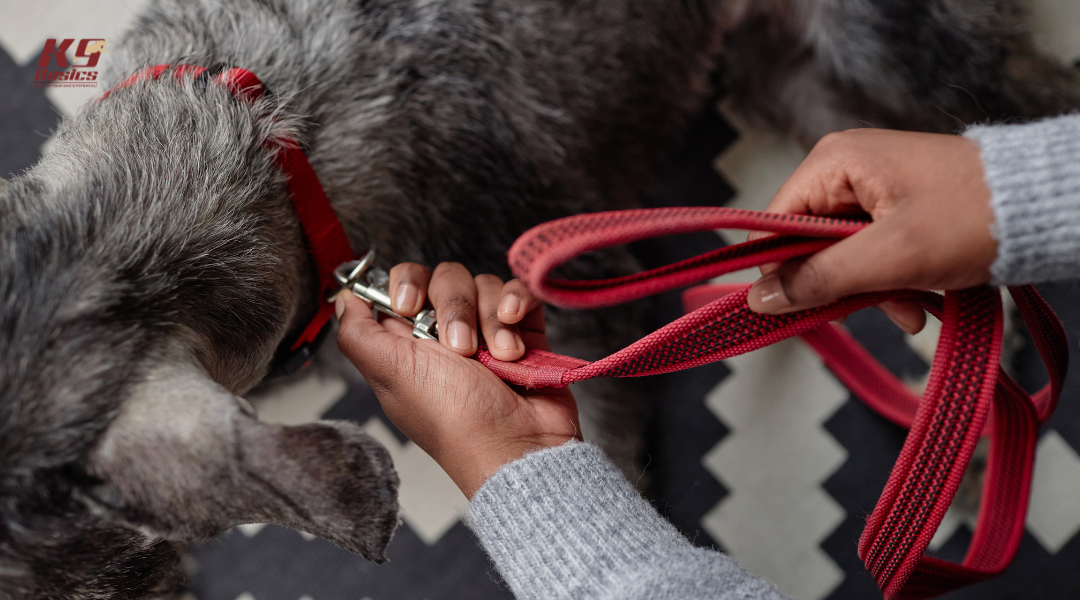
Leash management helps interrupt that rehearsal process before the dog can fully launch into the behavior.
For example, keeping a dog on a properly fitted leash during greetings allows the owner to limit jumping opportunities calmly and safely while reinforcing better choices.
This does not mean harsh corrections or physically overpowering the dog. It means creating structure so the dog cannot repeatedly practice chaotic greetings while learning new behaviors.
Training for Busy, Real-World Environments
Dogs need opportunities to learn how to think clearly and remain responsive while distractions are present. Without that exposure, many dogs simply become overwhelmed the moment excitement levels rise.
Real-world training teaches dogs how to navigate stimulation without completely losing focus. That might mean practicing leash manners near distractions, working on calm greetings around visitors, or helping the dog disengage from exciting triggers before arousal escalates too far.
Why Consistency From Owners Matters Most
One of the biggest reasons dogs struggle with behavior long-term is inconsistency from the humans around them. Dogs learn through patterns. When expectations constantly change, confusion follows quickly.
If jumping is ignored one day but corrected the next, or if one family member allows behaviors that another person discourages, the dog receives mixed information about what is actually expected.
Over time, this inconsistency weakens reliability and often creates frustration for both the dog and the owner.
This is why owner involvement matters so much during training. Long-term success depends not only on what happens during formal sessions but also on what happens every day inside the home.
At K9 Basics, owners are taught how to create clearer communication and more consistent follow-through so dogs are not left guessing.
When everyone in the household approaches behavior the same way, dogs typically become calmer, more confident, and far more reliable over time.
Professional Guidance from K9 Basics Makes a Difference!
Call us at (866) 457-3815 or, if you’re from New Jersey, Pennsylvania, Delaware, or New York, visit us at 131 Kennilworth Road, Marlton, NJ 08053, to learn more about our group training classes.
Also, browse our blog and social media for various topics about dogs and their lives with us!