
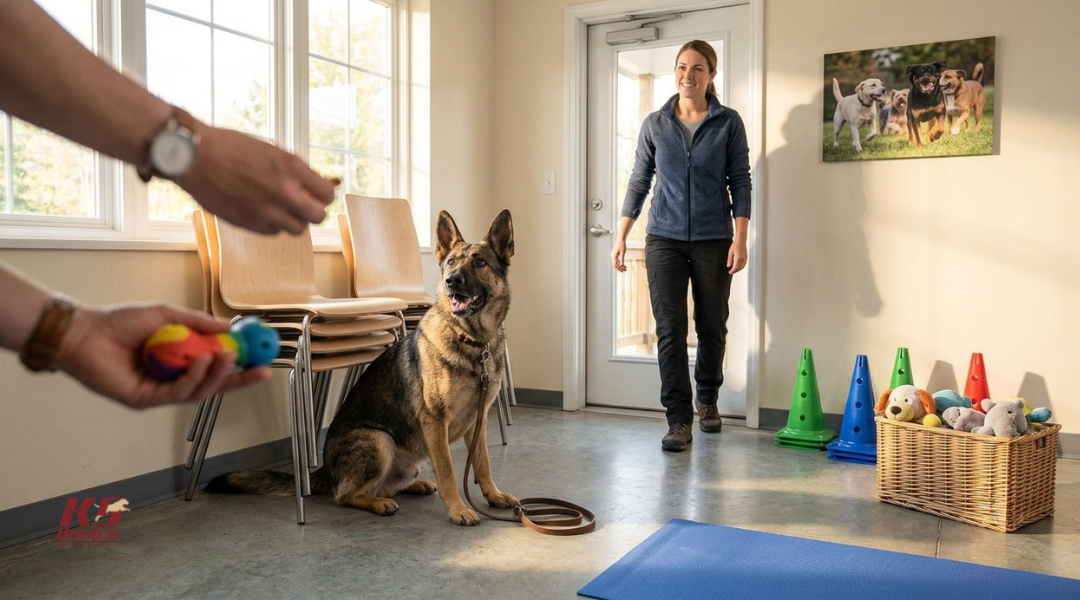
For years, dog owners were told that they needed to be the “alpha” in their relationship with their dog.
However, modern research into canine behavior and learning has challenged many of these long-held beliefs.
Today, professional trainers understand that effective leadership is not built through fear, intimidation, or physical dominance.
Instead, successful training focuses on communication, obedience, consistency, trust, and clear expectations. Dogs thrive when they understand what is expected of them and feel confident looking to their owners for guidance.
This doesn’t mean boundaries and structure disappear. In fact, clear rules and consistent leadership remain essential. The difference is that modern dog training aims to create cooperation rather than compliance through fear.

Where the Alpha Dog Theory Came From
Advice centered around dominating a dog, showing authority, and preventing the dog from gaining control of the household.
While these ideas became popular in training circles, modern research has revealed that much of this thinking was based on a misunderstanding of animal behavior.
The Origins of Dominance Theory
The concept of the “alpha dog” can be traced back to research conducted in the 1940s on captive wolves.
In these studies, unrelated wolves were placed together in artificial environments, leading researchers to observe competition, conflict, and the formation of social hierarchies.
These findings were later applied to domestic dogs, leading many people to believe that dogs were constantly trying to gain dominance over their owners.
As a result, these now-outdated training methods often focused on asserting control through physical corrections, intimidation, or techniques designed to establish the owner as the pack leader.
Why Dominance-Based Training Can Create Problems
While dominance-based training methods are often intended to establish control, they can sometimes create unintended consequences. They do not always address the underlying reason a dog is behaving that way in the first place.
Dogs learn best when they understand what is expected of them. When training relies heavily on punishment or confrontation, dogs may become confused, anxious, or less confident in certain situations.
Rather than strengthening the relationship between dog and owner, these methods can sometimes create uncertainty and reduce trust.
The Risks of Fear and Intimidation
Training methods that focus on forcing compliance can place a dog under significant stress. Techniques such as harsh leash corrections, physical restraint, or intimidation may stop a behavior in the moment, but they can also create negative associations with the training process itself.
Fear Does Not Teach Alternative Behaviors
When a dog is punished for an unwanted behavior, they may learn what not to do, but they are not necessarily taught what they should do instead. Effective training focuses on providing clear guidance and rewarding desirable choices so dogs can confidently understand what is expected.
Intimidation Can Damage Trust
Dogs thrive when they feel safe and secure with their owners. If training consistently relies on fear or confrontation, it can weaken the bond between dog and owner, making communication and cooperation more difficult over time.
How Stress Can Affect Behavior
Stress can have a significant impact on a dog’s ability to learn and respond appropriately. When a dog feels overwhelmed, their focus often shifts from learning to simply coping with the situation.
Stress Can Increase Reactivity
Dogs experiencing stress may become more sensitive to triggers, leading to behaviors such as barking, lunging, avoidance, or difficulty concentrating. In some cases, attempts to suppress these behaviors through punishment can actually increase the dog’s overall anxiety.
Chronic Stress Can Slow Learning
Learning requires a dog to be engaged and able to process information. When stress levels remain elevated, dogs may struggle to retain new skills, respond consistently to cues, or make good decisions in challenging environments.
By focusing on clear communication, structure, and positive reinforcement, trainers can help dogs feel more confident and secure, creating an environment where learning is both effective and sustainable.

What Modern Dog Training Looks Like
Modern dog training is not about letting dogs do whatever they want, nor is it about controlling them through fear. Instead, it focuses on creating a clear line of communication between dog and owner while teaching behaviors that can be successfully applied in everyday life.
At K9 Basics, our trainers work with dogs of all ages, breeds, and temperaments, helping owners build reliable behaviors through structured training programs tailored to their individual goals.
Whether a dog is learning basic obedience, working through behavioral challenges, or preparing for advanced off-leash reliability, the focus remains the same: helping dogs understand what is expected of them while strengthening their relationship with their owners.
Building Trust Through Positive Reinforcement
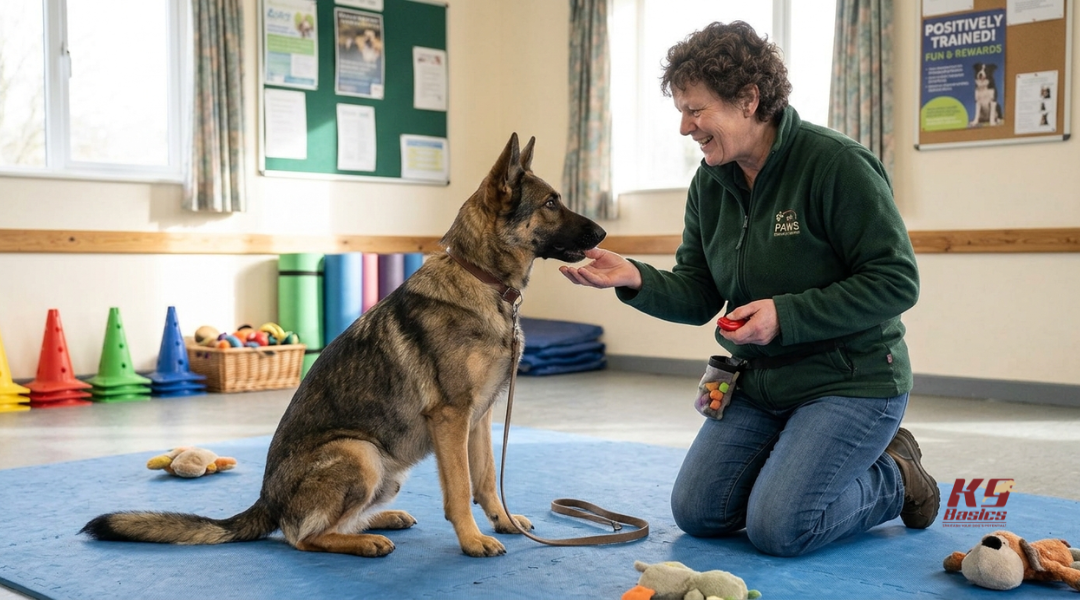
Positive reinforcement is one of the most effective ways to teach new behaviors. Simply put, dogs are more likely to repeat behaviors that lead to positive outcomes.
When a dog sits politely instead of jumping, comes when called, or remains calm around distractions, rewarding those choices helps reinforce the behavior and encourages the dog to make the same decision again in the future.
This approach allows dogs to learn with confidence rather than uncertainty. Instead of worrying about making a mistake, they learn how to succeed.
At K9 Basics, positive reinforcement is often combined with clear communication and consistent expectations to help dogs develop reliable behaviors that carry over into real-world situations.
Why Clear Boundaries Still Matter
One common misconception is that positive reinforcement means there are no rules. In reality, successful training requires both encouragement and structure.
Dogs thrive when they understand what is expected of them. Clear boundaries help eliminate confusion and provide consistency from one situation to the next.
For example, if a dog is not allowed to jump on guests, pull excessively on walks, or rush through doorways, those expectations need to remain consistent. The goal is not to punish the dog for making mistakes, but to guide them toward more appropriate behaviors and reinforce those choices when they make them.
When boundaries are applied fairly and consistently, dogs often become more confident because they know exactly how to navigate their environment.
Leadership Through Connection, Not Control
Effective leadership is one of the most important elements of dog training. However, leadership should not be confused with dominance.
Dogs look to their owners for guidance, direction, and security. When owners communicate clearly and consistently, dogs are less likely to feel responsible for making decisions on their own, which can help reduce anxiety, confusion, and unwanted behaviors.
At K9 Basics, we often explain that leadership is earned through trust and consistency rather than force. A dog that trusts their owner is more likely to remain engaged, follow guidance, and make good decisions in challenging situations.
Creating Structure and Consistency
Structure provides dogs with a predictable framework for success.
Consistent routines, clear expectations, and regular training sessions help dogs understand how to behave in different environments. This consistency is especially important when addressing behavioral challenges such as reactivity, excessive excitement, poor impulse control, or unreliable recall.
Small daily interactions often have a greater impact than occasional training sessions. Consistently reinforcing desired behaviors during walks, mealtimes, greetings, and playtime helps create habits that become second nature over time.
Helping Dogs Feel Safe and Confident
Many unwanted behaviors stem from uncertainty, anxiety, or a lack of confidence rather than an attempt to dominate their owners.
When dogs understand what is expected of them and trust the people guiding them, they are often able to relax and make better decisions. This confidence can improve everything from obedience and focus to social interactions and behavior around distractions.
At K9 Basics, helping dogs build confidence is a key component of every training program. Through structured exercises, real-world practice, and ongoing owner education, we help create the foundation for lasting success.
For dog owners interested in learning more about modern training methods, behavior, and the relationship between dogs and their humans, our Unleashed Podcast regularly explores these topics with practical insights and real-world training discussions from the K9 Basics team.
Building a Stronger Relationship with Your Dog with K9 Basics
Call us at (866) 457-3815 or, if you’re from New Jersey, Pennsylvania, Delaware, or New York, visit us at 131 Kennilworth Road, Marlton, NJ 08053, to learn more about our group training classes.
Also, browse our blog and social media for various topics about dogs and their lives with us.