
Planning a trip should feel exciting, but living with an untrained dog turns vacation prep into pure stress. Dealing with destructive chewing, heavy barking, accidents inside, or leash pulling makes anyone want to get away.
However, leaving a dog with unaddressed behavior problems at a boarding facility or with a house sitter rarely gives you the break you hope for. Rapid changes in environment almost always increase a dog’s stress and make bad behaviors worse.
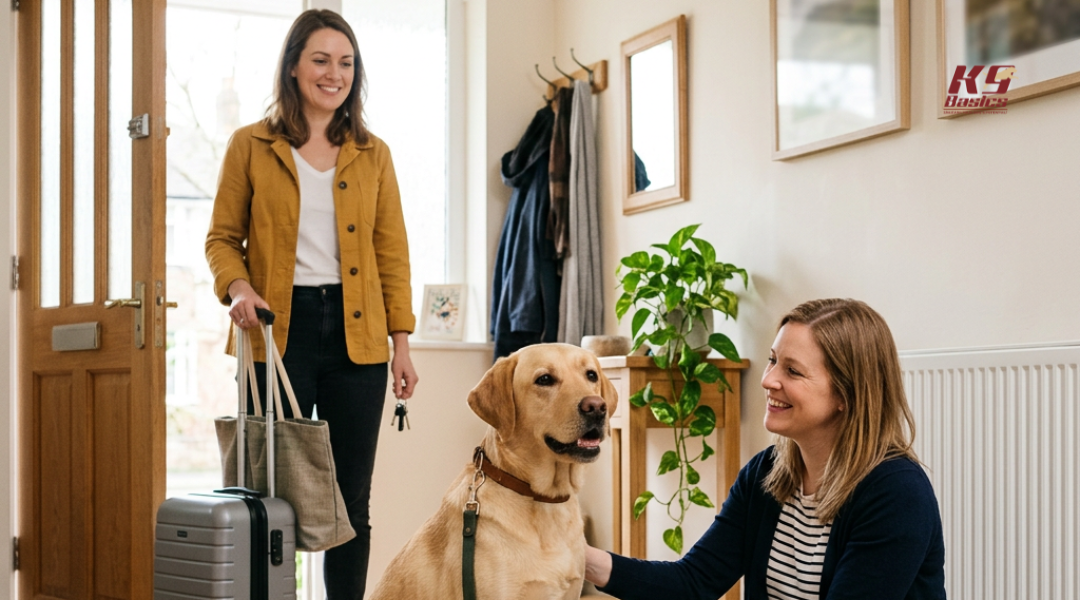
The Reality Check: Are You Escaping Stress or Doubling It?
It is easy to think a vacation will give both you and your dog a fresh start. You might hope a week apart helps everyone relax. But while you sit on a beach or explore a new city, your dog is left behind without their main source of security: you.
Dogs need routine, structure, and clear leadership to feel safe. When an anxious dog enters a new place, their fear spikes. A little worry at home can turn into full-blown panic at a kennel or under a sitter’s care. Instead of coming home to a refreshed pet, owners often return to a dog whose behavior has gotten much worse.
The Hidden Sitter Nightmare: What Really Happens When You Leave
Leaving a dog with severe behavior problems places a heavy load on friends, family, or professional sitters:
- Accidents and Property Damage: A dog that is not fully housebroken will likely have accidents in a new place. Sitters end up cleaning floors, fixing chewed furniture, or repairing damaged doors. This can cause frustration and ruin personal relationships.
- Separation Panic and Constant Barking: Dogs that panic when left alone can bark for hours, chew through drywall, or hurt themselves trying to escape a crate. Most sitters are not trained to handle a panicking dog, leading to sleepless nights and neighbor complaints.
- Safety Risks and Handling Issues: If a dog lunges on the leash, guards food, or snaps when handled, an unfamiliar sitter faces real danger. Escapes, dog fights, or bites become major risks.
Commercial boarding kennels face similar problems. Loud noises, strange smells, and dozens of barking dogs create constant stress for a pet that lacks basic crate training or impulse control.
The Ultimate Pre-Trip Prep Timeline
Fixing behavior issues takes time, structure, and patience. To enjoy a worry-free vacation, build a solid training foundation long before packing your bags. Follow this preparation timeline to get your dog ready.
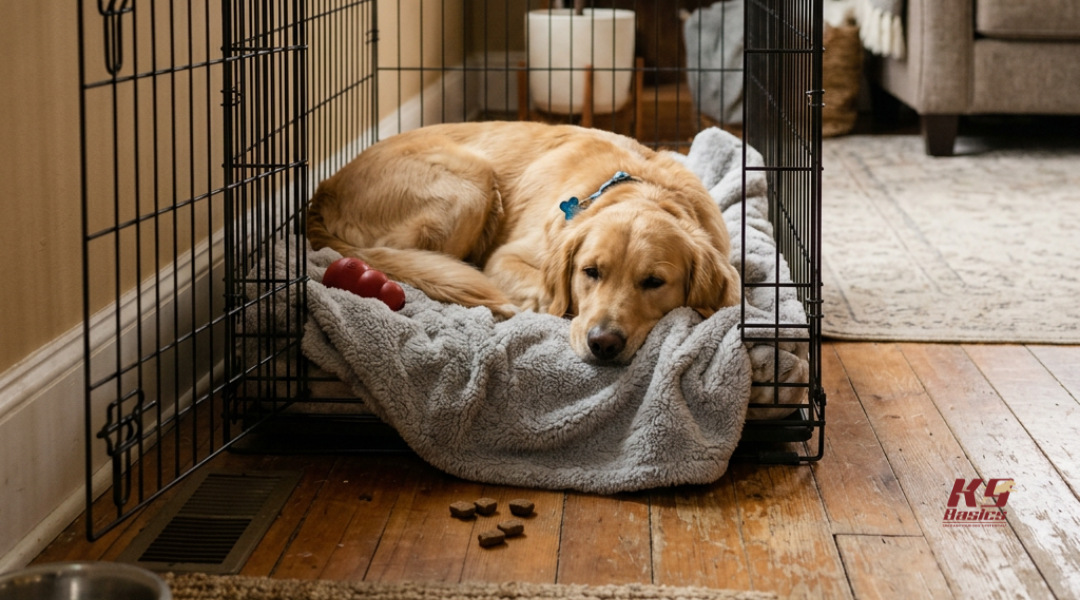
Phase 1: Turning the Crate into a Safe Haven (3 to 4 Weeks)
The crate should feel like a safe sanctuary, never a punishment.
- Create Positive Feelings: Feed all meals inside the open crate. Drop high-value treats inside throughout the day without locking the door.
- Build Up Duration: Close the door for short periods while sitting in the room. Slowly add time before stepping out of sight.
- Practice Calm Rest: Crate your dog while you are home and active. Teach them that crate time means rest time, no matter what happens around them.
Phase 2: Nailing Down House Rules and Potty Habits (4 to 6 Weeks)
Stopping accidents requires strict supervision and clear habits.
- Limit Free Roam: Keep your dog in specific areas using leashes or baby gates until accidents stop completely.
- Set Potty Schedules: Take your dog outside on a leash at set times. Reward them immediately after they go.
- Watch for Early Signals: Learn the subtle signs that mean your dog needs to go out. Share these signals with anyone caring for your dog.
Phase 3: Unlocking Independence and Instant Calm (6 to 8 Weeks)
Teaching your dog to relax without clinging to you makes sitting easier.
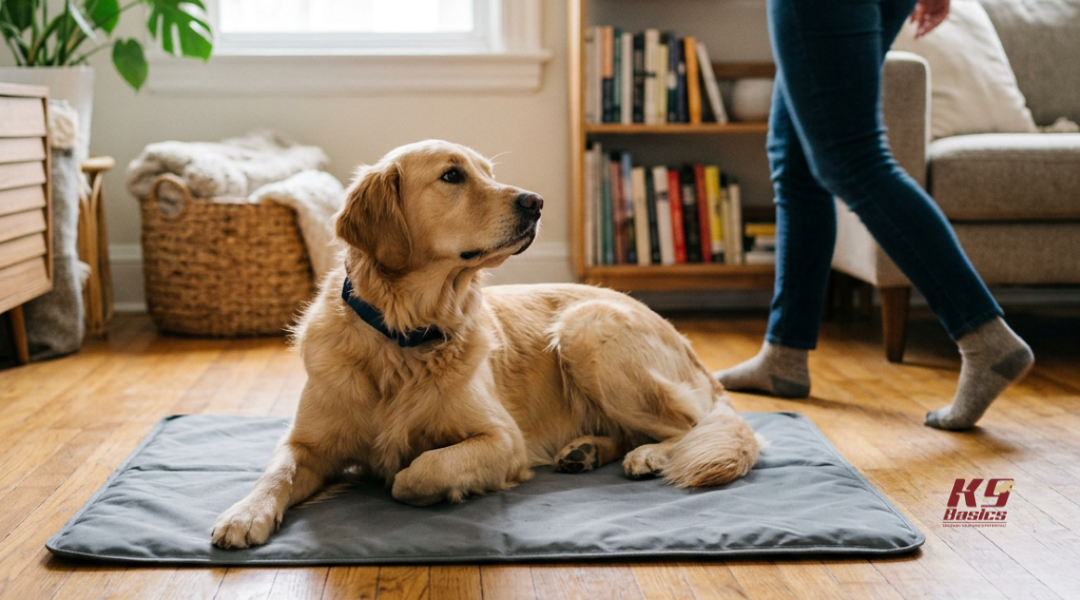
- Place Command: Teach your dog to go to a designated bed or mat and stay there calmly while family members move around.
- Teach Calm Departures: Pick up your keys, put on your coat, or touch the door handle without leaving. This stops your dog from panicking every time you touch your keys.
- Practice Short Exits: Step out for short periods without making a fuss. Keep entrances and exits calm to show your dog that leaving is normal.
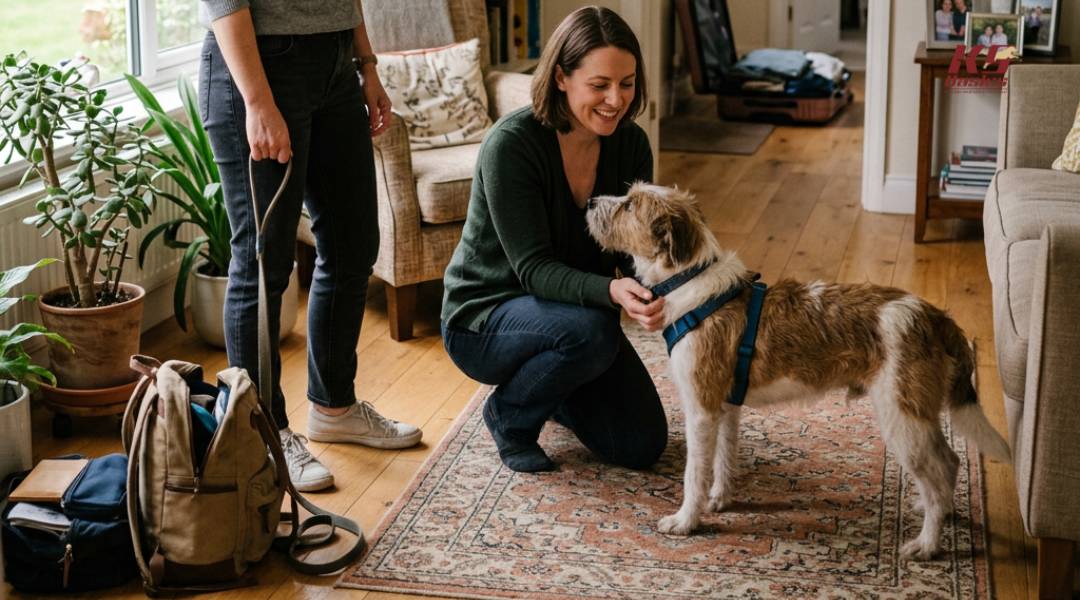
The Hand-Off Playbook: Sitter Success Guaranteed
Once your dog masters basic manners, leave clear written guidance for your sitter.
- Write Down the Daily Schedule: List exact times for meals, potty breaks, walks, and rest. Stick to your dog’s regular routine.
- List Specific Commands: Write down the exact words your dog knows (such as “Place,” “Sit,” “Break,” or “Off”). Using consistent words prevents confusion.
- Run a Short Test: Have the sitter watch your dog for a few hours or overnight while you stay nearby. This helps you spot any problems early.
- Leave Emergency Info: Provide phone numbers for your primary vet, an emergency vet clinic, and a local contact who can make decisions if you cannot be reached.
Return Home to a Happy Dog and Total Peace of Mind
A peaceful vacation starts long before you leave home. Taking time to address behavioral issues now guarantees true peace of mind later. Quality training protects your dog’s mental health, saves your sitter from burnout, prevents damage, and ensures you return home to a happy companion.
Call us at (866) 457-3815 or, if you’re from New Jersey, Pennsylvania, Delaware, or New York, visit us at 131 Kennilworth Road, Marlton, NJ 08053, to learn more about our group training classes.
Also, browse our blog and social media for various topics about dogs and their lives with us!