
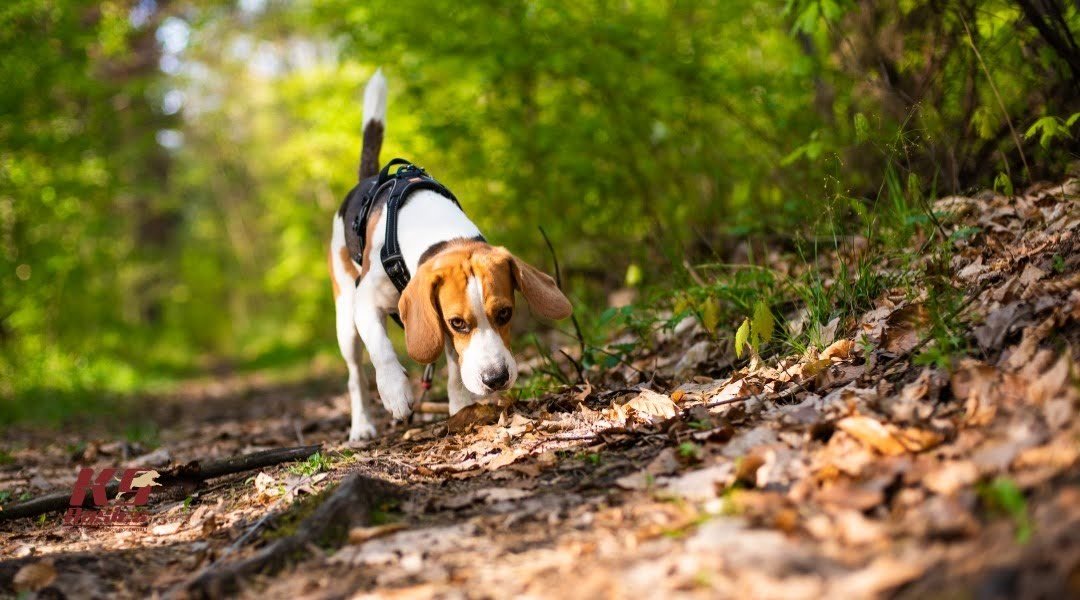
Autumn turns simple neighborhood walks and woods trails into fun playgrounds for dogs. Cool air brings falling leaves, dropping acorns, busy wildlife, and damp ground where wild mushrooms grow. While these smells make walks fun, they also bring real seasonal risks.
Knowing the difference between simple sniffing and dangerous eating is key during fall. Teaching a reliable “Leave It” command protects your dog from choking, intestinal blockage, and plant poisoning without taking away the fun of outdoor walks.
What You Will Learn
- How to spot the difference between safe sniffing and risky behavior.
- A step-by-step guide to build a reliable “Leave It” command outdoors.
- Easy drills to stop leaf-chasing and high-drive squirrel chasing.
- Clear answers to common questions about fall trail safety.
Safe Sniffing vs. Dangerous Eating
Dogs explore the world mostly through their noses. Letting your dog sniff during walks gives them a mental workout and lowers stress. Still, owners need to see when simple sniffing turns into unsafe biting or swallowing.
Signs of Safe Sniffing
- Steady movement: The dog moves calmly from one smell to another with a relaxed body.
- Nose leading: The nose hovers near the ground, but the mouth stays closed or relaxed.
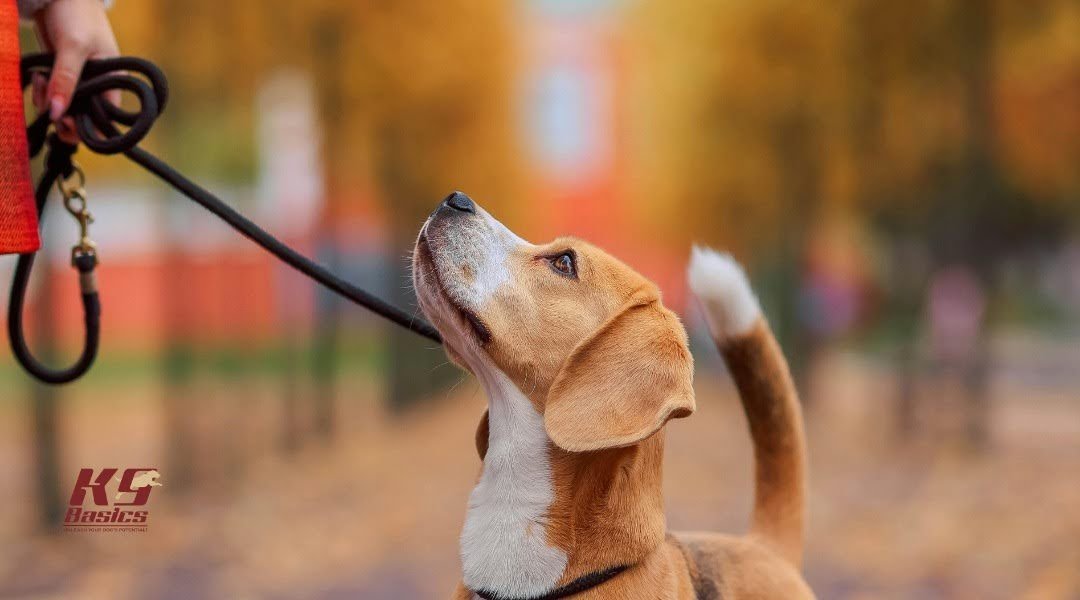
- Easy turn: The dog happily looks up when you call or change direction.
Signs of Dangerous Foraging
- Pushing with the snout: The dog pushes hard into leaf piles or mud to uncover hidden items.
- Licking and tasting: The mouth opens, licks, or chews on wild mushrooms or decaying plants.
- Freezing or guarding: The dog stops moving over an item, stiffens up, or tries to swallow things fast before you can step in.
Building a Strong “Leave It” Command
A reliable “Leave It” response means your dog turns away from an item before touching it. To build this skill, start in a quiet room before moving to busy outdoor trails.
Training Stages
| Stage | Where to Practice | Item Used | Success Marker |
| Phase 1: First Step | Indoors, quiet room. | Low-value treat covered by hand. | Dog backs away without you touching them. |
| Phase 2: On the Floor | Indoors, standing up. | Kibble dropped on the floor. | Dog looks up at you instead of reaching down. |
| Phase 3: Outdoor Setup | Controlled yard or driveway. | Acorns or dry leaves on the ground. | Dog walks past items on the leash without grabbing them. |
| Phase 4: Real Trail | Outdoor trail setting. | Wild mushrooms or wet leaves. | Dog stops right away when you give the command. |
Step 1: Start Indoors
Hold a piece of low-value kibble in a closed hand. Show your fist to your dog and stay quiet. Your dog will likely sniff, lick, or paw at your hand. The second your dog backs away or turns their head, mark the moment with a quick praise word (“Yes!”) and give them a high-value treat from your other hand. Repeat until your dog backs off right away when you show your hand.
Step 2: Add the Cue and Move to the Floor
Place a piece of food on the floor and cover it with your foot. Say “Leave it” one time. When your dog stops trying to reach your foot and looks at you, mark the behavior and reward them from your hand. Never let your dog eat the food on the floor. The reward must always come directly from you.
Step 3: Move to Outdoor Hazards
Move to your yard or a quiet sidewalk. Place a test item, like a large acorn or a clump of leaves, on the ground while your dog is on a short leash. Walk past the item. As your dog notices it, say “Leave it.” The moment your dog turns away, give them a high-value reward, such as fresh chicken or cheese.
Controlling Fall Distractions
Beyond items on the ground like mushrooms and acorns, fall brings moving distractions: blowing leaves and fast wildlife. Managing these triggers requires building self-control when your dog gets excited.
The Leaf-Drop Drill
To stop automatic chasing of blowing leaves, hold your dog on a leash while a family member drops a handful of dry leaves a few feet away.
- Wait for your dog to look at the falling leaves.
- Call your dog’s name or use a focus phrase like “Look at me.”
- Reward generously when your dog turns away from the leaves to look at you.
- Repeat until falling leaves prompt your dog to check in with you on their own.
Managing Wildlife Focus
Squirrels are very active in fall as they prepare for winter. This triggers a strong chase drive in many dogs. Use distant wildlife sightings as teaching moments.
- Spot the animal before your dog gets overly excited.
- Allow your dog to look at the squirrel for one second.
- Say your reward word (“Yes!”) and hold a treat right at your hip.
- As your dog turns to take the treat, step back to create more distance between you and the animal.
This trains your dog to treat the sight of wildlife as a sign to check in with you rather than start a chase.
Frequently Asked Questions
Q: Are acorns truly dangerous for dogs, or are they just a small choking risk?
A: Acorns bring several risks. They are a clear choking risk and can cause dangerous stomach blockages if swallowed whole. Acorns also contain chemicals called tannins, which can cause upset stomach, vomiting, diarrhea, and, in severe cases, kidney damage.
Q: What should I do if my dog eats a wild mushroom on a walk?
A: Treat all wild mushrooms as toxic plants. Safely remove any extra pieces from your dog’s mouth if you can, take a clear photo of the mushroom, and contact your vet or an animal poison hotline right away. Do not wait for sickness to start.
Q: My dog grabs leaves and runs away like it is a game. How do I stop this?
A: Avoid chasing your dog, since this turns the problem into a game of keep-away. Stand still, stay quiet, and pull out a favorite toy or treat to trade. Work on a solid drop command indoors so you do not have to bargain outdoors.
Q: How can I keep my dog from eating grass and leaves in the fall?
A: Make sure your dog gets physical exercise and mental workouts before walks. Bored dogs often look for items on the ground to entertain themselves. Carrying a toy or practicing focus games during the walk keeps their attention centered on you.
Need Help Proofing Your Dog’s Trail Manners?
Exploring the fall woods with your dog should be fun, not stressful. Building a reliable “Leave It” command takes time, consistency, and real-world practice.
If your dog struggles with impulse control, wildlife distraction, or trail scavenging, our professional trainers at K9 Basics can help.
Call us at (866) 457-3815 or, if you’re from New Jersey, Pennsylvania, Delaware, or New York, visit us at 131 Kennilworth Road, Marlton, NJ 08053, to learn more about our group training classes.
Also, browse our blog and social media for a variety of topics about dogs and their lives with us!